In a bee hive, two larvae hatch within hours of each other. By any genetic accounting, they are identical because they have same mother and same DNA down to the last base pair.
Then the nurse bees make a decision. One larva is fed royal jelly for sixteen days straight. The other gets royal jelly for twenty-four hours, then gets switched to a diet of honey and pollen - the standard worker ration. That's the entire intervention. So there are no genetic edits, no different parents nor different eggs.
Eighteen days later, one of them is a queen: twice the size, ovaries fully developed, built to live for years. The other is a worker: smaller, sterile, built to live for weeks. We start with the same genome, but we get two completely different animals.
The mechanism isn't magic, it's methylation
For a long time this looked like something close to biological sleight of hand. It isn't. It's epigenetics, and we now understand a fair amount about how it works.
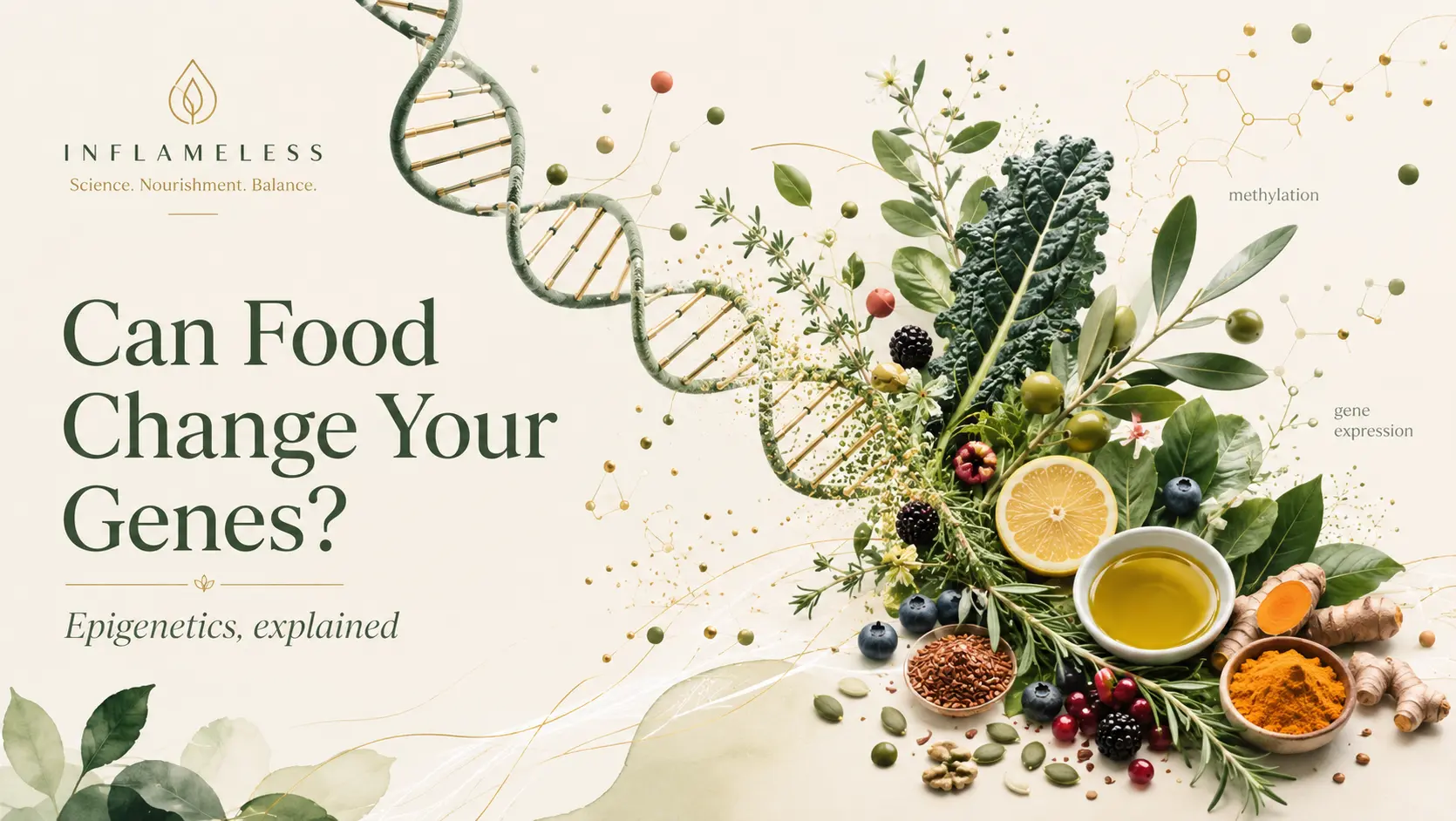
Royal jelly doesn't rewrite the larva's DNA. It changes which parts of that DNA get read. One of the clearer mechanisms involves DNA methylation - small chemical tags that sit on the genome and quiet certain genes down. Worker-destined larvae maintain higher methylation on a set of genes tied to growth and reproduction. Queen-destined larvae, fed continuously on royal jelly, show markedly reduced methylation on those same genes, and researchers have traced this to jelly compounds that inhibit the enzymes (DNMT3, specifically) responsible for laying those methyl tags down. With lower methylation what we get is more gene activity, more growth signaling and functioning ovaries. One study found that when scientists artificially suppressed that same enzyme in worker-destined larvae, without touching their diet, the majority developed into queens anyway. The diet's real job was suppressing an enzyme.
Royal jelly also contains a specific protein called royalactin, along with fatty acids like 10-HDA, that independently push on growth and body-size pathways.[ And some of the effect appears to be carried by microRNA in the jelly itself - regulatory RNA snippets that were shown to alter gene expression in the larvae that consumed them. Multiple, overlapping mechanisms, all converging on the same outcome: the food is not just calories, it is a set of instructions.
Honeybees carry the same three families of DNA-methylating enzymes that humans do, which is part of why they've become a useful model for studying nutrition-driven epigenetic change in the first place.
We are not larvae, but we are not exempt either
I want to be clear here, because the queen-worker story gets used sloppily online, usually to imply that a green smoothie will switch on your longevity genes by Tuesday. That's not what the research supports.
What the research does support is more modest and, frankly, more interesting: nutrients function as signaling molecules in humans too, not just fuel. Fatty acids bind transcription factors like PPARs. Plant compounds interact with electrophile response elements. Diet-derived microRNAs and metabolites shape which genes get expressed and which stay quiet, particularly around inflammatory pathways. A 2020 review in nutritional epigenetics describes this plainly: nutrients affect the chromatin, which programs and reprograms our biological networks - sometimes with effects that outlast the meal by a long way. The Mediterranean dietary pattern in particular has been studied for its epigenetic footprint, with specific plant compounds shown to modulate microRNA expression tied to disease risk.
None of this is as dramatic as growing ovaries in eighteen days. But "less dramatic" is not the same as "not real." It's the same principle running at a slower, quieter tempo: repeated dietary signals, interpreted by ancient cellular machinery, compounding over years instead of days.
Where the signal turns to static
Here's where the hive analogy gets useful again, in reverse. A queen larva gets a coherent signal, over and over, and her biology organizes around it. What happens to a system that gets a garbled signal, over and over?
That's a reasonable description of what ultra-processed food does to us. These products are engineered to hit taste and reward targets while stripped of the fiber, phytochemicals and structural context that would normally accompany those calories - and a growing body of human evidence links that pattern to measurable, low-grade systemic inflammation. A prospective cohort study following over 116,000 adults across 21 countries found each additional daily serving of ultra-processed food associated with a meaningfully higher risk of developing inflammatory bowel disease. Separate NHANES-based work has tied ultra-processed intake to elevated markers of chronic low-grade inflammation independent of body weight. A 2024 comment in Nature Reviews Immunology puts it more bluntly: UPFs appear to dysregulate immune balance through mechanisms that are still being worked out, but the epidemiological signal is already strong enough to warrant urgent research attention.
When we give our body a diet consisting mainly of UPFs, it isn't confused about whether it received calories, but it gets confused about what those calories mean - because the packaging that normally carries that meaning (fiber, polyphenols, intact food matrix) has been engineered out.
The reset is boring, on purpose
Nobody is going to grow functioning ovaries from eating more vegetables this week. However, what we get at the end of the day is different outcomes startiwth with identical material depending on what was consumed and for how long. Our version of that story doesn't resolve in eighteen days. It resolves over years, in inflammatory markers and metabolic flexibility instead of ovaries and wingspan.
The nurse bees don't deliberate. They just feed the larva what a queen needs, consistently, until the biology catches up. That's the whole method. It's also, unglamorously, the whole point.
References
- Guo X, et al. Epigenetic Modification of Gene Expression in Honey Bees by Heterospecific Gland Secretions. PLOS ONE. 2012. https://journals.plos.org/plosone/article?id=10.1371/journal.pone.0043727
- Guo X, et al. Epigenetic Modification of Gene Expression in Honey Bees by Heterospecific Gland Secretions. https://www.ncbi.nlm.nih.gov/pmc/articles/PMC3424160/
- A Study of Small Intestinal Epigenomic Changes Induced by Royal Jelly. PMC. 2024. https://www.ncbi.nlm.nih.gov/pmc/articles/PMC11393943/
- Epigenetics Mechanisms of Honeybees: Secrets of Royal Jelly. PMC. 2023. https://www.ncbi.nlm.nih.gov/pmc/articles/PMC10687967/
- Epigenetics Spotlight. Nature Scitable. https://www.nature.com/scitable/spotlight/epigenetics-26097411/
- Epigenetics Mechanisms of Honeybees: Secrets of Royal Jelly. ResearchGate. 2025. https://www.researchgate.net/publication/376046088_Epigenetics_Mechanisms_of_Honeybees_Secrets_of_Royal_Jelly
- Epigenetic Mechanisms in Apis mellifera: From Development to Environmental Adaptation. PMC. https://pmc.ncbi.nlm.nih.gov/articles/PMC12293781/
- Whole-Blood Gene Expression Profiles in Large-Scale Epidemiological Studies: What Do They Tell? PMC. https://www.ncbi.nlm.nih.gov/pmc/articles/PMC4639574/
- Genes and Diet in the Prevention of Chronic Diseases in Future Generations. PMC. https://www.ncbi.nlm.nih.gov/pmc/articles/PMC7178197/
- Kadayifci FZ, et al. Nutriepigenomics: the role of nutrition in epigenetic control of human diseases. PubMed. 2015. https://pubmed.ncbi.nlm.nih.gov/26001651/
- Science and Healthy Meals in the World: Nutritional Epigenomics and Nutrigenetics of the Mediterranean Diet. PMC. https://www.ncbi.nlm.nih.gov/pmc/articles/PMC7353392/
- Ultra-processed foods: increasing the risk of inflammation and immune dysregulation? Nature Reviews Immunology. 2024. https://www.nature.com/articles/s41577-024-01049-x
- Associations between ultra-processed food and drink consumption and biomarkers of chronic low-grade inflammation. PMC. https://pmc.ncbi.nlm.nih.gov/articles/PMC11982146/
- Ultra-processed foods drive a slow 'hum' of inflammation toward disease. Refractor. 2025. https://refractor.io/diet-nutrition/ultra-processed-foods-inflammation/
- Narula N, et al. Association of ultra-processed food intake with risk of inflammatory bowel disease: prospective cohort study. BMJ. 2021. https://pubmed.ncbi.nlm.nih.gov/34261638/
Medical Disclaimer
This article is intended for educational purposes only and does not constitute medical advice, diagnosis, or treatment. The information presented reflects current research interpretation and should not be used to self-diagnose or self-treat any health condition. Individual nutritional needs vary based on genetics, health status, medications, and other factors. Always consult a qualified healthcare provider before making changes to your diet, especially if you have an existing medical condition, are pregnant or breastfeeding, or are taking medication.