Let me ask you something: when you last searched for "anti-inflammatory foods," what came up?
Probably açaí, spirulina, matcha powder, chlorella tablets and turmeric. Things sold in small, expensive packets with claims written in the kind of font that makes them look like they were designed in a Californian wellness studio.
Now let me tell you what I eat most days for lunch.
Sardines, a handful of bitter rocket dressed with olive oil and a squeeze of lemon. Maybe some cannellini beans on the side. If there is leftover roasted broccoli from the night before, that goes in too.
It is not Instagram-worthy. But it takes about four minutes to assemble and from a pure anti-inflammatory mechanism standpoint, it outperforms almost every superfood powder on the market.
Here is why - and I mean why, not just a list of nutrients with stars next to them.
The problem with the superfood category
"Superfood" is a marketing term, not a scientific one.
There is no regulatory definition for it, no threshold of evidence a food must meet before the label gets applied, and no independent body checking whether the claims on the packet reflect what the research actually shows at physiologically relevant doses.
What the superfood industry does extremely well is take a real piece of science - a genuine finding about, say, the antioxidant capacity of açaí berries in an in vitro study - and translate it into a consumer product positioned as a shortcut to the results that real dietary patterns produce over months and years.
That shortcut does not exist, but the marketing works like a charm.
The foods I want to talk about today are not exciting. They are not new, they have been sitting on the shelves of Mediterranean markets and fishing villages for centuries. And the research behind them is not a single promising study, but decades of clinical trials, cohort data and mechanistic science that consistently points in the same direction.
Extra virgin olive oil: the most studied fat in human history
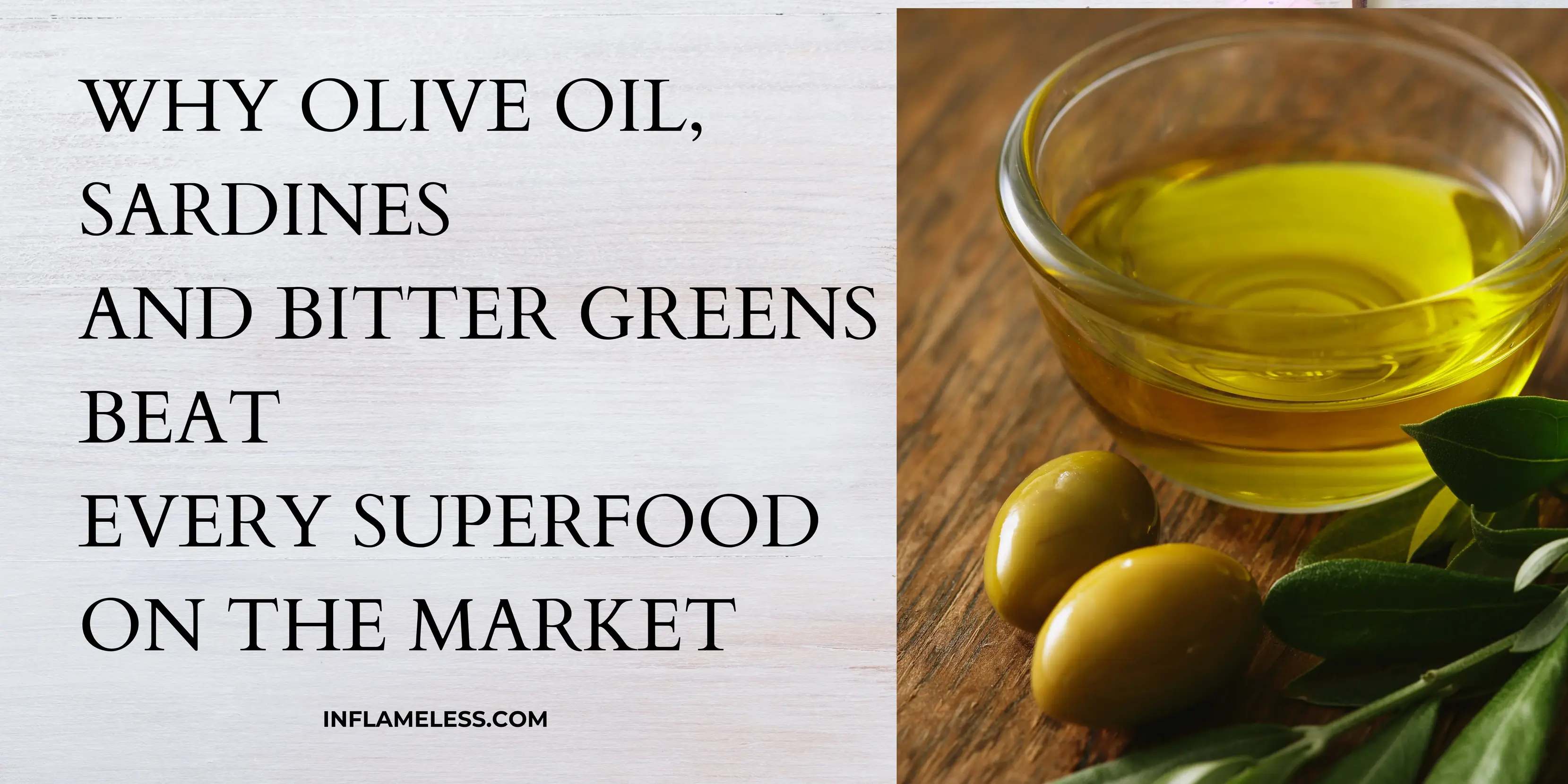
Let us start with olive oil, because I think it is the most underestimated food in the modern kitchen.
It is not only a "healthy fat" in the vague way that phrase gets used. It contains a compound called oleocanthal that inhibits the same enzymes (COX-1 and COX-2) that ibuprofen targets.
Let´s read that again: a food that works through the same anti-inflammatory pathway as a pharmaceutical drug. Of course, it´s not identically, nor at the same potency, but through the same fundamental mechanism. The burning sensation you feel at the back of your throat when you swallow high-quality extra virgin olive oil? That is the oleocanthal. That sensation is actually your body registering the compound's activity.
Beyond oleocanthal, extra virgin olive oil is rich in oleocanthin, hydroxytyrosol and oleuropein that are polyphenols that suppress the NF-κB signalling pathway, which is essentially the master switch of inflammatory gene expression. When NF-κB is chronically activated, it drives the production of pro-inflammatory cytokines including TNF-α, IL-1β and IL-6. Olive oil polyphenols help turn that switch down.
The landmark PREDIMED trial (a large randomised controlled trial following over 7,000 participants) found that a Mediterranean diet supplemented with extra virgin olive oil significantly reduced cardiovascular events compared to a low-fat control diet, with reductions in inflammatory biomarkers including CRP and IL-6 as part of the mechanism. Two to three tablespoons per day was the effective dose in that study.
The important detail: this must be extra virgin, cold-pressed, ideally consumed raw or at low heat. Refined olive oil, the pale, flavourless kind sold cheaply in large plastic bottles, has had most of its polyphenols stripped out in processing. It is not the same food and it will not produce the same results.
For those eating a Mediterranean diet, olive oil is not a supplement, it is a daily dietary staple that happens to have some of the most robust anti-inflammatory evidence in clinical nutrition. Treat it accordingly.
Sardines: the most anti-inflammatory protein you are probably ignoring
Sardines are, for reasons I find genuinely baffling, considered an unglamorous food.
They are also one of the most nutrient-dense, anti-inflammatory, sustainable and affordable protein sources available. The fact that they come in a tin does not change their biochemistry. But, of course, if you have access to fresh sardines, please use them: grill them, bake them, turn them into paté...
Here is what a standard 100g serving of sardines in good olive oil delivers: approximately 1.5 to 2 grams of combined EPA (eicosapentaenoic acid) and DHA (docosahexaenoic acid) - the two Omega-3 fatty acids with the strongest anti-inflammatory evidence in human clinical research.
EPA and DHA work by competing with arachidonic acid for incorporation into cell membrane phospholipids. Arachidonic acid is an omega-6 fatty acid that, when released from cell membranes and metabolised, produces pro-inflammatory eicosanoids like prostaglandins, thromboxanes, leukotrienes. When EPA and DHA are present in higher concentrations in the membrane, the balance shifts. The resulting signalling molecules are less inflammatory, and EPA in particular serves as a precursor to a class of compounds called specialised pro-resolving mediators (SPMs) (lipoxins, resolvins and protectins) which actively promote the resolution of inflammation rather than simply reducing its onset.
This is a critical distinction. Most anti-inflammatory interventions suppress the inflammatory signal. Omega-3-derived SPMs help the body finish the inflammatory process properly, which is what prevents the low-grade, chronic, unresolved inflammation that drives most of the conditions my community members are dealing with.
Sardines also provide vitamin D, selenium, vitamin B12, calcium (particularly when you eat the bones, which you should) and complete protein. They are small fish, low in the food chain, which means mercury accumulation is not a meaningful concern, unlike larger predatory fish such as tuna or swordfish.
Eat them twice a week at minimum. On toast, in salads, with roasted vegetables, straight from the tin with a fork. The method matters less than the habit.
Bitter greens: the category your gut bacteria are waiting for
This is the one most people skip over and it is possibly the most important of the three.
Bitter greens: rocket (arugula), radicchio, endive, chicory, dandelion leaves, wild fennel fronds, watercress, mustard greens. The vegetables that Mediterranean grandmothers gathered from the side of the road and dressed with lemon and oil before anyone had invented the concept of a superfood.
They are bitter for a reason. That bitterness comes primarily from compounds called sesquiterpene lactones and glucosinolates, which are part of the plant's natural defence chemistry. When we consume them, those compounds interact with our biology in ways that are genuinely useful.
Glucosinolates, found particularly in rocket, watercress and mustard greens, are converted in the gut to isothiocyanates, including the well-researched compound sulforaphane. Sulforaphane activates the Nrf2 pathway, a transcription factor that upregulates the body's own antioxidant defence systems, including glutathione synthesis. Rather than acting as an antioxidant itself, sulforaphane essentially tells your cells to produce more of their own antioxidant enzymes. This is a more durable and physiologically intelligent mechanism than consuming exogenous antioxidants as supplements.
The bitter compounds in chicory, dandelion and endive act as prebiotics, feeding Bifidobacterium and Lactobacillus species in the gut and supporting the production of short-chain fatty acids, particularly butyrate, which maintains the integrity of the intestinal barrier and directly suppresses inflammatory signalling in colonocytes (the cells lining the colon).
In other words: bitter greens are simultaneously activating your cellular antioxidant defences and feeding the gut bacteria that keep your intestinal lining intact. A compromised intestinal lining (what is commonly called leaky gut) is one of the primary drivers of systemic, low-grade inflammation. Bitter greens help prevent that from happening.
They also stimulate bile production, which supports fat digestion, fat-soluble vitamin absorption (including vitamins A, D, E and K) and the clearance of lipopolysaccharides that are bacterial endotoxins that enter the bloodstream through a permeable gut wall and trigger widespread inflammatory responses.
Why daily staples outperform exotic supplements
Here is the real point I want to make.
The combined effect of two tablespoons of extra virgin olive oil, a 100g serving of sardines and a generous handful of rocket with meals, consumed consistently across weeks and months, produces measurable reductions in CRP, IL-6, TNF-α and oxidised LDL - the inflammatory markers that actually matter clinically.
A scoop of green powder in a morning smoothie, consumed sporadically, does not have the same effect.
It is not that supplements are always useless. It is that their effect size is modest compared to consistent dietary patterns and their dose in most commercial products is far below what was used in the studies cited on the label. The research on spirulina, for example, uses doses of 2 to 8 grams per day in clinical trials. A teaspoon of spirulina powder in a smoothie delivers somewhere around one gram. The marketing rarely mentions this.
Mediterranean food culture solved the anti-inflammatory eating problem a long time ago: olive oil on everything, fish several times a week, vegetables that are bitter enough to make you pay attention, legumes at most meals. None of it was revolutionary but it was effective.
A practical starting point
If you are not eating these three foods regularly, the simplest way to start is not a meal plan. It is a shopping list and one habit.
Buy a bottle of high-quality extra virgin olive oil - cold-pressed, dark glass, ideally from a single-origin producer. Use it daily. On salads, on vegetables, drizzled on soup, stirred into cooked legumes. Two to three tablespoons across the day is your target.
Buy a few tins of sardines in good olive oil or water. Eat them twice a week, in whatever configuration fits your meals.
Add a bitter green to at least one meal per day. Rocket is the easiest entry point - it works raw in salads, wilted briefly in a pan, or scattered on top of almost anything.
That is it. That is the intervention.
The consistency of that pattern across 8 to 12 weeks will do more for your inflammatory baseline than any supplement protocol you could build from the same budget.
Ready to build this into a full 30-day reset?
Knowing which foods work is one thing. Having a day-by-day structure that puts them together - with meal guidance, habit protocols and the science behind every choice — is what makes the difference between reading about anti-inflammatory eating and actually doing it consistently enough to feel the shift.
The 30-Day Anti-Inflammatory Reset Guide is exactly that. Thirty days of practical, structured guidance built around the same principles in this article: real Mediterranean foods, evidence-based habits, no extreme restrictions and no expensive supplements required.
References
-
Beauchamp, G.K., et al. (2005). Ibuprofen-like activity in extra-virgin olive oil. Nature, 437(7055), 45–46. https://doi.org/10.1038/437045a
-
Estruch, R., et al. (2013). Primary prevention of cardiovascular disease with a Mediterranean diet (PREDIMED). New England Journal of Medicine, 368(14), 1279–1290. https://doi.org/10.1056/NEJMoa1200303
-
Calder, P.C. (2017). Omega-3 fatty acids and inflammatory processes: from molecules to man. Biochemical Society Transactions, 45(5), 1105–1115. https://doi.org/10.1042/BST20160474
-
Serhan, C.N. (2014). Pro-resolving lipid mediators are leads for resolution physiology. Nature, 510(7503), 92–101. https://doi.org/10.1038/nature13479
-
Higdon, J.V., et al. (2007). Cruciferous vegetables and human cancer risk: epidemiological evidence and mechanistic basis. Pharmacological Research, 55(3), 224–236. https://doi.org/10.1016/j.phrs.2007.01.009
-
Dinkova-Kostova, A.T., & Talalay, P. (2008). Direct and indirect antioxidant properties of inducers of cytoprotective proteins. Molecular Nutrition & Food Research, 52(S1), S128–S138. https://doi.org/10.1002/mnfr.200700195
-
Vinolo, M.A.R., et al. (2011). Regulation of inflammation by short chain fatty acids. Nutrients, 3(10), 858–876. https://doi.org/10.3390/nu3100858
-
Schwingshackl, L., & Hoffmann, G. (2014). Monounsaturated fatty acids, olive oil and health status: a systematic review and meta-analysis of cohort studies. Lipids in Health and Disease, 13, 154. https://doi.org/10.1186/1476-511X-13-154
-
Mori, T.A. (2017). Marine omega-3 fatty acids in the prevention of cardiovascular disease. Fitoterapia, 123, 51–58. https://doi.org/10.1016/j.fitote.2017.09.015
-
Morisco, F., et al. (2010). Effect of omega-3 fatty acids (n-3 PUFAs) on the liver in NAFLD. Current Pharmaceutical Design, 16(6), 741–750.
Medical disclaimer
The content of this article is intended for educational and informational purposes only. It does not constitute medical advice, diagnosis or treatment, and should not be used as a substitute for professional medical guidance. The information provided reflects general nutritional science and is not tailored to individual health conditions or circumstances.
If you have a diagnosed medical condition, are taking medication, are pregnant or breastfeeding, or have complex health concerns, please consult your doctor, registered dietitian or qualified healthcare provider before making significant changes to your diet.
Chronic inflammation is a complex physiological process. Dietary interventions can meaningfully support health but are not a replacement for medical treatment where treatment is indicated.