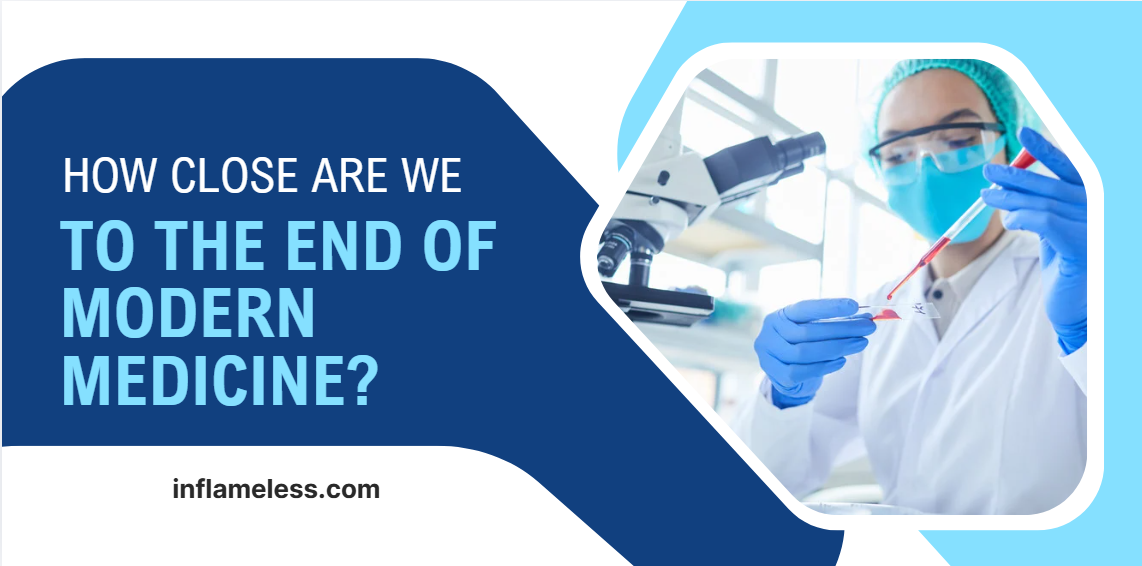
Right now, while you're reading this, modern medicine is living through the strangest paradox in its history. On one hand, we're watching progress that borders on science fiction: gene therapies curing cancers that were once a death sentence, cartilage regeneration techniques, artificial hearts that would have seemed absurd twenty years ago. On the other hand, the entire structure holding up these technological miracles is quietly but rapidly crumbling at its foundation.
The invisible base under everything we call "modern healthcare" is antibiotics. Without them, cutting-edge medicine is a giant with feet of clay. And the warning coming from the World Health Organization is as blunt as it is real: we are moving, at speed, toward the end of the medical era we currently know.
The invisible foundation under our miracles
It's easy to forget what the world looked like before penicillin. In the first half of the last century, a scraped knee in the garden, an abscessed tooth or a difficult birth could be a death sentence. Antibiotics changed the trajectory of our species, adding decades to global life expectancy in a matter of years.
The core problem is that antibiotics aren't simple medical tools - they're weapons in a biological war against organisms that evolve. Every dose administered exerts enormous selective pressure. Bacteria don't go down quietly; they mutate, they trade resistance genes with other species and they learn to neutralize the molecules we depend on.
Today, the stunning progress in oncology depends entirely on our ability to control infection. Chemotherapy wipes out a patient's immune system; without effective antibiotics to protect them through those critical weeks, cancer treatment becomes unsurvivable. Organ transplants, complex surgeries but also the routine ones turn into a gamble with death if the bacteria circulating in hospitals can no longer be killed by anything in the cabinet.
The numbers behind a silent crisis
This isn't a theoretical projection for some distant century; it's a measurable clinical reality happening now. Global analyses show antimicrobial resistance has already become one of the leading causes of death worldwide.
The most comprehensive estimate to date comes from the Global Research on Antimicrobial Resistance (GRAM) project, published in The Lancet in September 2024. Drawing on data from 204 countries between 1990 and 2021, the study projects that bacterial AMR will be responsible for an estimated 39.1 million deaths between 2025 and 2050, attributable directly to resistant infections. That works out to roughly three deaths every minute, globally, for the next quarter-century.
By mid-century, the study estimates that 1.91 million people could die as a direct result of AMR in 2050 alone - an increase of almost 70% compared to 2022. And the burden isn't falling evenly across age groups. While childhood deaths from AMR have dropped sharply thanks to vaccination programs, deaths among people over 70 increased by more than 80% between 1990 and 2021, a trend the GRAM researchers expect to continue, roughly doubling again by 2050. The same study found that, in 2021 alone, AMR directly caused 1.14 million deaths and was associated with 4.71 million deaths globally - meaning resistant bacteria played a contributing role in millions more fatalities than the headline figure suggests.
This isn't only a problem for low-resource countries. Looking at the EU and EEA, the European Centre for Disease Prevention and Control (ECDC) reported in November 2025 that AMR is estimated to cause more than 35,000 deaths across the EU and EEA every year. More troubling: the EU set five formal targets in 2023 to curb resistance and reduce antibiotic use by 2030, and as of the latest data, total antibiotic consumption actually increased in 2024 instead of declining toward that target. Bloodstream infections from carbapenem-resistant Klebsiella pneumoniae rose 61% across 30 EU/EEA countries between 2019 and 2024, despite a target to reduce them by 5%.
The picture in the United States tells a similar story. According to the CDC, more than 2.8 million antimicrobial-resistant infections occur in the US each year, and more than 35,000 people die as a direct result. When Clostridioides difficile - a bacterium closely tied to antibiotic use - is factored in, the total burden exceeds 3 million infections and 48,000 deaths annually. The CDC has also confirmed that resistant infections rose roughly 20% during the 2021–2022 period compared with pre-pandemic levels, undoing years of progress made before COVID-19 disrupted infection control in hospitals.
Where the threat actually comes from
The biggest mistake in understanding this crisis is assuming the blame sits entirely with patients demanding antibiotics for a common cold, or doctors who prescribe too easily. That's only part of the equation. The real engine of bacterial resistance is hiding on our plates and inside the economic model of industrial farming.
Globally, roughly 70% of the antibiotics produced don't go to hospitals or pharmacies - they go to animal farms. About 70% of global antimicrobial use has historically gone toward food animals, not because most animals are sick, but because antibiotics improve feed efficiency and let livestock be raised in denser, more crowded conditions.
The European Union banned the use of antibiotics as pure growth promoters back in 2006 and has since tightened rules around preventive group treatment. But globally, the trend is moving the wrong direction. A 2025 study from the FAO, published in Nature Communications, projects that global antibiotic use in livestock could rise to roughly 143,481 tons by 2040 - a 29.5% increase from the 2019 baseline of 110,777 tons under current practices. The same research found real cause for optimism, though: strategic improvements to livestock productivity and animal health management could cut that projected use by as much as 57%, bringing it down to around 62,000 tons by 2040 - proof that this trajectory isn't fixed in stone.
Industrial farms have effectively become the largest natural-selection laboratories for superbugs on the planet. Resistant bacteria don't stay contained on the farm. They travel through the meat we eat, through runoff into groundwater, and through manure used as crop fertilizer - entering the broader ecosystem in a feedback loop public health researchers call the One Health framework. It's a systemic problem in which short-term profit logic in food production directly undermines long-term sanitary safety for everyone downstream - including people who've never set foot on a farm.
The part we rarely talk about: antibiotic pollution
And there is another piece of this story that rarely makes it into polite conversations about antibiotic resistance: the way antibiotics are manufactured.
One of the most disturbing examples comes from Patancheru, an industrial area near Hyderabad, India, where wastewater from bulk drug manufacturing has been studied for years. In 2007, researchers analyzing effluent from a treatment plant serving around 90 bulk drug manufacturers found extraordinarily high levels of pharmaceutical residues. Ciprofloxacin, one of the most common broad-spectrum antibiotics, was detected at concentrations up to 31,000 µg/L , levels high enough to put intense selective pressure on bacteria living in that environment.
In plain English: the water was not just “polluted.” It was acting like a bacterial boot camp.
Later studies found that this kind of environment can become a reservoir for highly multi-drug-resistant bacteria and mobile resistance genes, the genetic tools bacteria use to share resistance with one another. A 2017 investigation around Hyderabad found antimicrobial contamination across environmental samples and widespread presence of resistant Gram-negative bacteria, including bacteria carrying carbapenemase genes. Carbapenems are often considered last-resort antibiotics.
This matters because antibiotic resistance is not only created inside hospitals or farms. It can also be selected for in rivers, drains, wastewater plants and industrial zones, especially when bacteria are exposed to antibiotic residues day after day, at levels strong enough to kill the weak but not eliminate the whole microbial community.
That is how resistance learns.
And this is why the antibiotic crisis is not just a “take antibiotics responsibly” problem. It is also a manufacturing problem, a wastewater problem, a food-system problem and a regulatory problem.
If we want antibiotics to keep working inside the human body, we also have to stop treating the outside world like a place where their residues do not matter.
Why big pharma stopped looking for new antibiotics
The obvious question is: why aren't we just inventing new antibiotics? The answer lies in a market failure baked into the current pharmaceutical business model.
Developing a single new antibiotic molecule requires upwards of a billion dollars and over a decade of research, with an enormous failure rate during clinical testing. But here's the economic paradox that makes the math brutal: if a company manages to discover a genuinely effective new antibiotic, the medical community will immediately lock it away as a "last-resort weapon," reserved only for the most extreme cases - precisely to delay the bacteria's ability to develop resistance to it. Sales volume, as a result, stays minuscule.
For pharmaceutical companies, it's vastly more profitable to pour research budgets into chronic disease treatments - medications a patient will buy and take daily for years, sometimes for life - than into an antibiotic a patient takes for seven days and then, ideally, never needs again.
This isn't speculation. The WHO's most recent pipeline analysis, published in October 2025, confirms the crisis directly. The number of antibacterial drugs in clinical development fell from 97 in 2023 to just 90 in 2025. Of those 90, only 15 are considered genuinely innovative - meaning they could overcome existing resistance mechanisms - and only 5 of those 15 are effective against pathogens on WHO's "critical" priority list. Since 2017, just 17 new antibacterial agents have reached approval, and only two of them represent an entirely new chemical class. As one researcher described it to the trade outlet Healio, compared to almost any other therapeutic area, the antibiotic pipeline is "deep in a hole."
What lies beyond antibiotics
If we don't see a real shift - politically, economically, scientifically - we're not heading toward a sudden apocalypse. We're heading toward a slow, expensive and painful erosion of quality of life. A post-antibiotic world means falling life expectancy and cities that become far harder to manage from a public-health standpoint.
Science is searching for alternatives, with real but uneven progress:
Bacteriophage therapy uses viruses that hunt and destroy specific bacteria, leaving the rest of the microbiome untouched. Countries like Georgia (home to the renowned Eliava Institute), Poland and Belgium have used personalized phage therapy for years, and as of February 2025, more than 60 interventional phage studies are listed on ClinicalTrials.gov as completed, recruiting or planned. Regulatory frameworks remain a genuine bottleneck, though: in the US, phages are classified as biological drugs requiring an Investigational New Drug application even for compassionate use, while the EMA's compassionate-use pathway under Article 83 currently moves faster than the FDA's IND process. Neither agency has approved a standalone phage product for general clinical use yet.
CRISPR-based gene editing of pathogens and new vaccine development aimed at preventing infections before they ever require treatment are both advancing, but implementation at meaningful scale, and the regulatory frameworks to support it, remains slow.
The underlying question by the end of all this isn't really a medical one anymore. It's a question of collective responsibility and systemic choice. Cutting antibiotic use in agriculture drastically means rethinking how we produce food and accepting higher costs for food grown through more sustainable methods. Are we willing, as a society, to pay the real price for cleaner food - protecting the effectiveness of the medications keeping us alive - or will we keep ignoring the warnings until this global crisis becomes personal for each of us?
Your body isn't broken and it hasn't "adapted." It's been working harder than it should to compensate. The Inflameless Living community is where we stop compensating and start actually resetting - with a structured 30-day protocol, weekly live calls, and a community of people doing the same thing in real life. Try it free for 7 days. → Join here!
This article is for informational and educational purposes and is not a substitute for professional medical advice, diagnosis, or treatment. Always consult a qualified healthcare provider regarding antibiotic use, infections, or any medical condition. If you believe you have an infection that isn't responding to treatment, seek medical attention promptly.
Sources
- Naghavi M, et al. "Global burden of bacterial antimicrobial resistance 1990–2021: a systematic analysis with forecasts to 2050." The Lancet, September 2024. https://doi.org/10.1016/S0140-6736(24)01867-1
- European Centre for Disease Prevention and Control (ECDC). "Antimicrobial resistance in the EU/EEA (EARS-Net) – Annual Epidemiological Report 2024." November 2025. ecdc.europa.eu
- ECDC & EMA. "Time to act and not react: how can the European Union turn the tide of antimicrobial resistance?" November 2025. ecdc.europa.eu
- Centers for Disease Control and Prevention (CDC). "About Antimicrobial Resistance." cdc.gov
- CDC. "Antimicrobial Resistance Threats in the United States, 2021–2022." cdc.gov
- World Health Organization (WHO). "Analysis of antibacterial agents in clinical and preclinical development: overview and analysis 2025." October 2025. who.int
- Acosta A, et al. "The future of antibiotic use in livestock." Nature Communications, April 2025. https://doi.org/10.1038/s41467-025-56825-7
- FAO. "New FAO-led study highlights that improving productivity is key to reducing antibiotic use in livestock." April 2025. fao.org
- Transatlantic Taskforce on Antimicrobial Resistance. "Considerations and perspectives on phage therapy." Nature Communications, December 2025. nature.com
- Larsson DGJ, de Pedro C, Paxéus N. “Effluent from drug manufactures contains extremely high levels of pharmaceuticals.” Journal of Hazardous Materials, 2007.
- Marathe NP, Regina VR, Walujkar SA, et al. “A Treatment Plant Receiving Waste Water from Multiple Bulk Drug Manufacturers Is a Reservoir for Highly Multi-Drug Resistant Integron-Bearing Bacteria.” PLOS ONE, 2013.
- Lübbert C, Baars C, Dayakar A, et al. “Environmental pollution with antimicrobial agents from bulk drug manufacturing industries in Hyderabad, South India, is associated with dissemination of extended-spectrum beta-lactamase and carbapenemase-producing pathogens.” Infection, 2017.
- Paul D, Talukdar D, Kapuganti RS, et al. “Antibiotic contamination and antimicrobial resistance dynamics in the urban sewage microbiome in India.” Nature Communications, 2026